BATTLEFIELD 6 / FIELD NOTES
Battlefield 6 spotting callouts: solid diamonds, hollow diamonds and what we say out loud
Our test frames from a single Battlefield 6 session taught us that two diamonds which look like one idea are really two, and that the quiet one matters as much as the loud one. This is how the pack in development decides what to say, and what to leave alone.
Quick card
- Solid 3D diamond
- Spotted enemy; gets a voice
- Hollow diamond
- Unspotted; stays silent
- Near targets
- Clock positions
- Other targets
- Relative words
- Distance
- In metres, only when a valid figure exists
- Objective markers
- Never called alone; used as a location reference
- Pack status
- In development, not released
Two diamonds that look like one idea
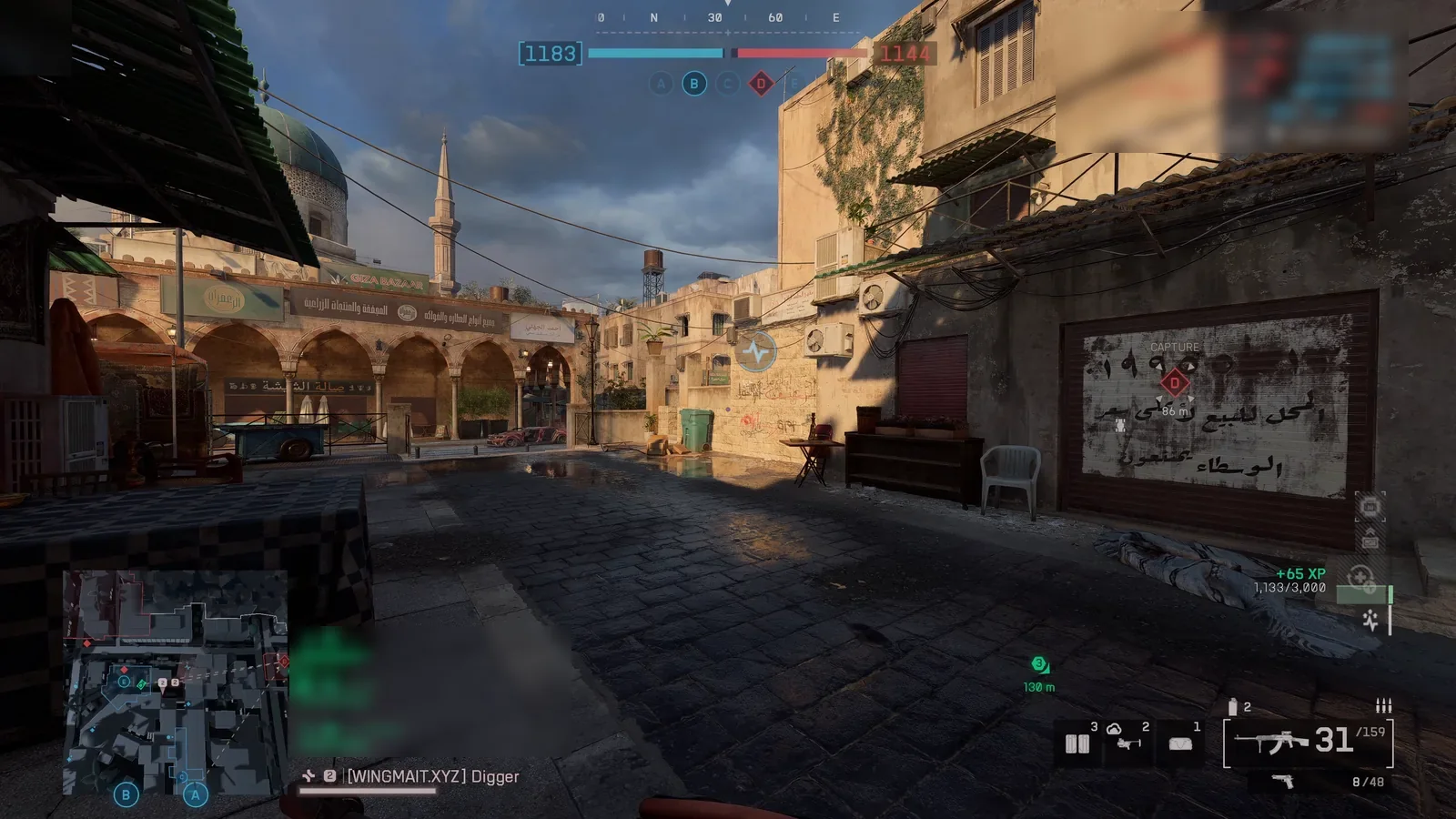
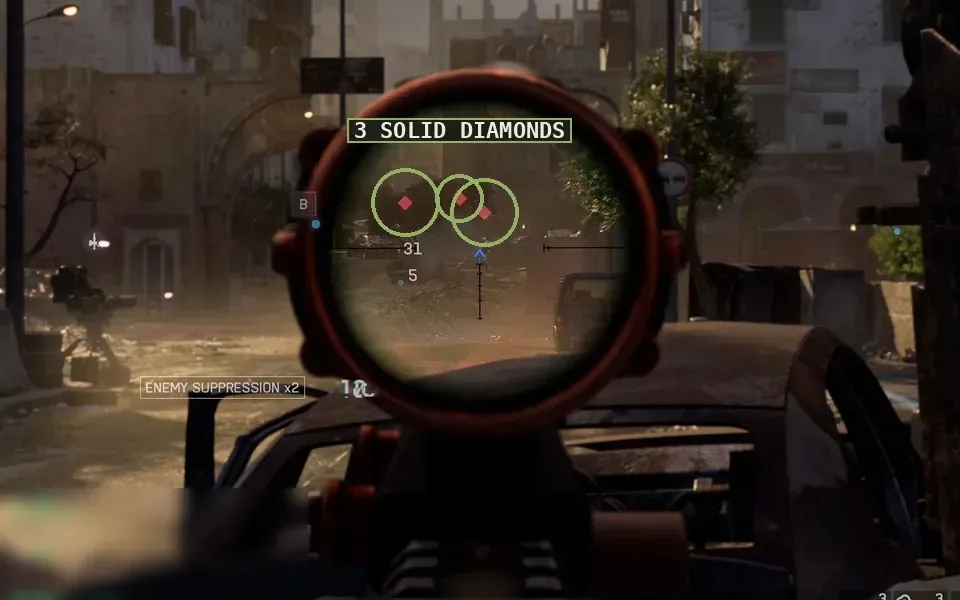
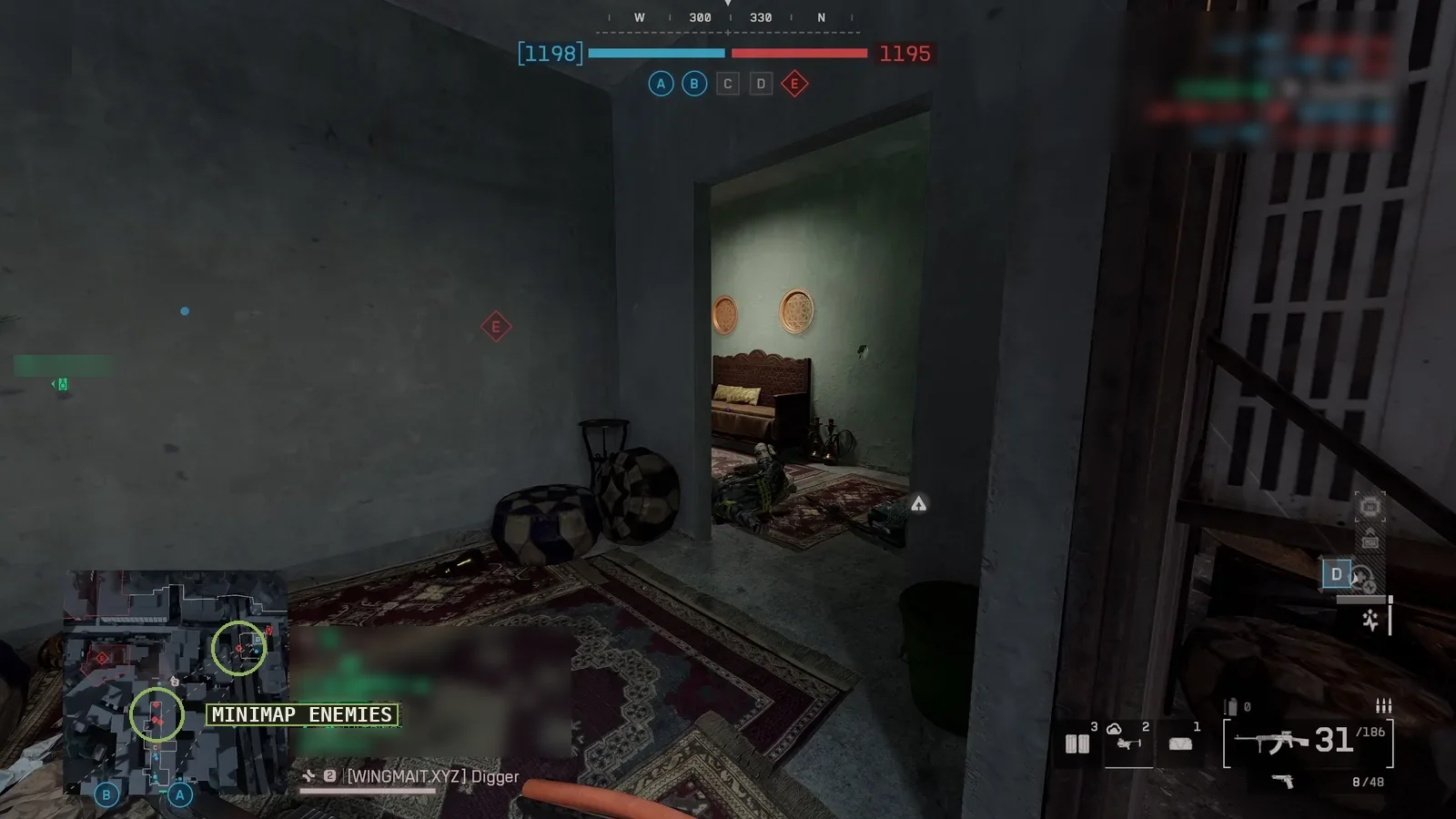
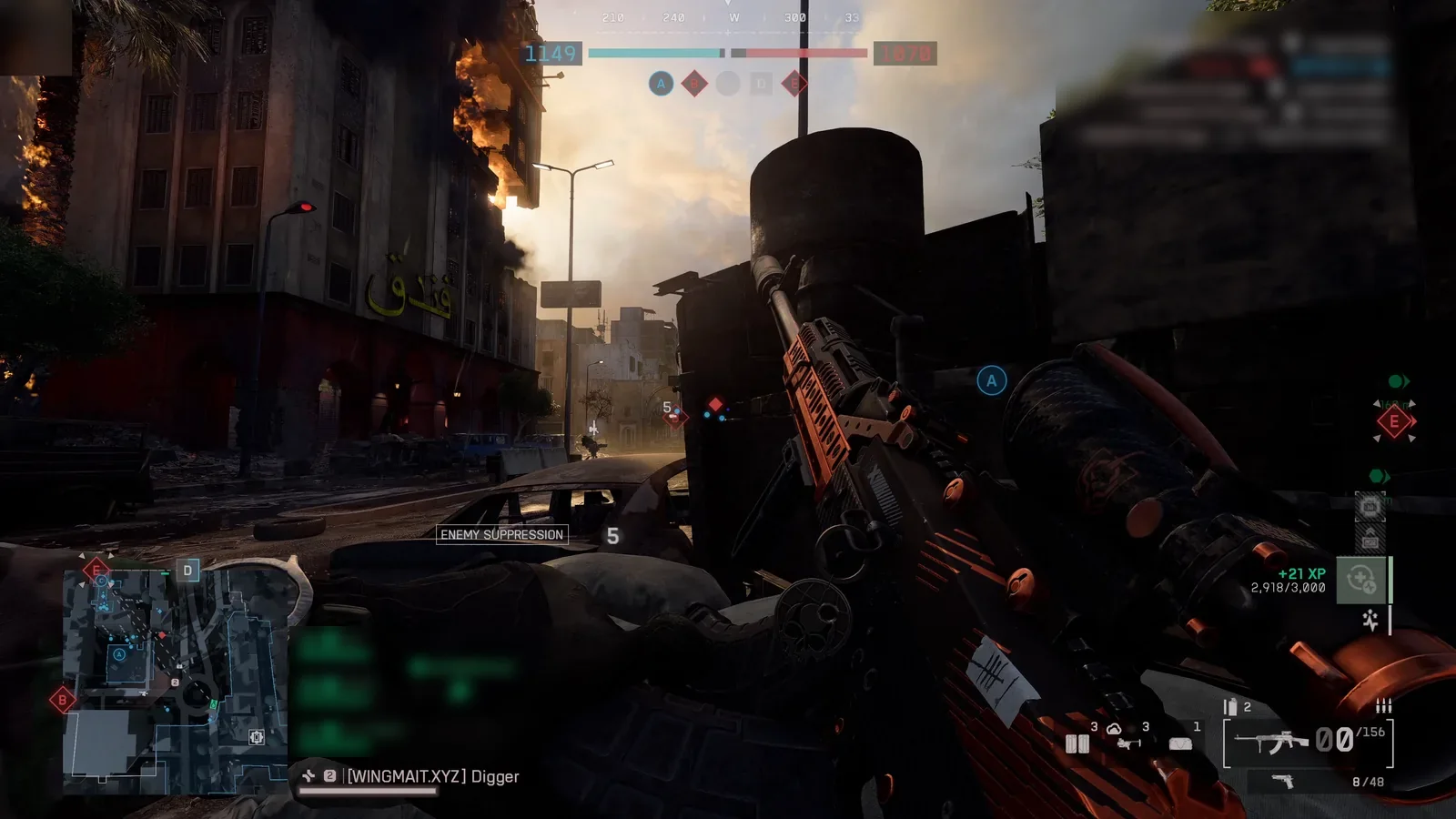
On a busy Battlefield 6 screen the red diamonds all seem to say the same thing, and for a while they said the same thing to us. They do not. Some are solid and some are hollow, and the labels our team confirmed from our own recording keep them firmly apart: a solid 3D diamond is a spotted enemy, and a hollow diamond is one that has not been spotted. We describe what is drawn on the screen and leave the official names to Electronic Arts, since we have not confirmed what the game itself calls either one.
Where these words come from
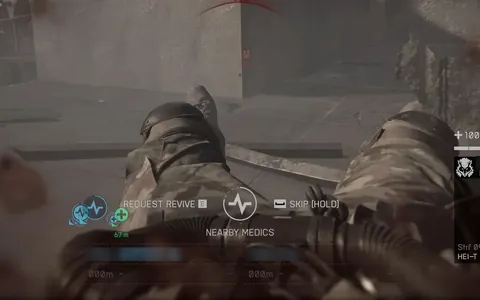
Everything on this page rests on one OBS recording from our own play sessions of Battlefield 6, captured at 3840 x 2160 and 60 frames a second, from which we pulled twenty-four frames and labelled each one as a team. Those labels are the ground truth for us, and where a label and our own first guess disagreed, the label won. The categories are plain: solid 3D diamond, hollow 3D diamond, minimap enemy, minimap enemy in a vehicle, revive distance, downed squadmate, and a set of negatives that matter more than they sound.
Why only spotted targets get a voice
The reasoning is simple and a little dull, which is how we like it. A solid diamond is a spotted target, so a spoken callout repeats something the screen has already settled, and it does so in a form you can hear while your eyes are busy elsewhere. A hollow diamond is the screen being less sure, and if we spoke every time one flickered into view we would be narrating guesses at the moment you least want noise. So hollow diamonds stay silent. That is our team's decision from the labelled frames, and one of them (frame 04 in our set) shows a hollow diamond sitting under a name bar where the right behaviour is simply nothing.
Clock positions near, relative words further out
A spotted target gets spoken in one of two styles, and which one depends on how close it is. For near targets we use clock positions, so a contact is described the way a pilot or a patrol leader would describe it. For everything else we use relative words, which are shorter and easier to catch in a loud fight. We chose both styles on purpose rather than picking one, because a clock position feels right at ten metres and clumsy at three hundred. A solid diamond also counts when the enemy is out of plain sight. In frame 16 the enemy is inside a building, and the diamond is solid all the same, so the callout follows the marker and not what we can see through the window.
Distance in metres, or nothing
Whenever a valid distance exists we add it, in metres, to the callout. When the screen does not show a readable figure we say the direction alone, because the rule we hold ourselves to is never to invent a distance. A callout with a made-up number is worse than a callout without one, since you will act on the number.
Objectives as a place to hang the callout
Enemy objective markers look different again: a letter inside an outlined diamond. We never call these out on their own, either as contacts or as objectives, because on their own they tell you nothing you did not already know. They are still useful as a location reference for enemies standing near them. In one labelled frame our team noted that this is exactly how the callout should read, something like "3 enemies on B objective", which gives a squad a place to look without a compass bearing or a long description.
What we deliberately do not call
The negatives are frames where something looks like a target and is not. One holds a residual marker left behind by someone exiting a vehicle, together with the vehicle skin; our team labelled it as not a target. Another is an explosion, which is bright and sudden and exactly the kind of thing a careless detector would shout about. We keep these frames because a callout that fires on the wrong thing teaches you to ignore the voice, and a voice you have learnt to ignore is no use at the moment it is right.
Three at once
One of our frames (frame 19) holds three solid diamonds in a single view, and our team was explicit that the detector has to find all three. Reading them is one problem; speaking them is another, since three separate callouts in a row would bury the useful part. Our intention, still being tested, is to fold them into one sentence with a count and a reference point, and we flag that as an intention and not a finished behaviour.
What this pack is, and what it is not
The Battlefield 6 pack is in development and has not been released. Our first attempt misaligned the capture, so we are reworking it, and a test build has been installed over the current Wing Mait with a rollback copy kept alongside. Wing Mait is not affiliated with or endorsed by Electronic Arts. It never injects into the game, reads its memory, hooks its renderer or sends it input; it works from what is on the screen, which is also why the screen is what we describe on this page.
Related field notes
Wing Mait is an independent project, not affiliated with or endorsed by Electronic Arts. Wing Mait for Battlefield 6 is in development and has not been released.