WARDOGS / FIELD NOTES
Base raiding: the explosive maths for getting through a FOB
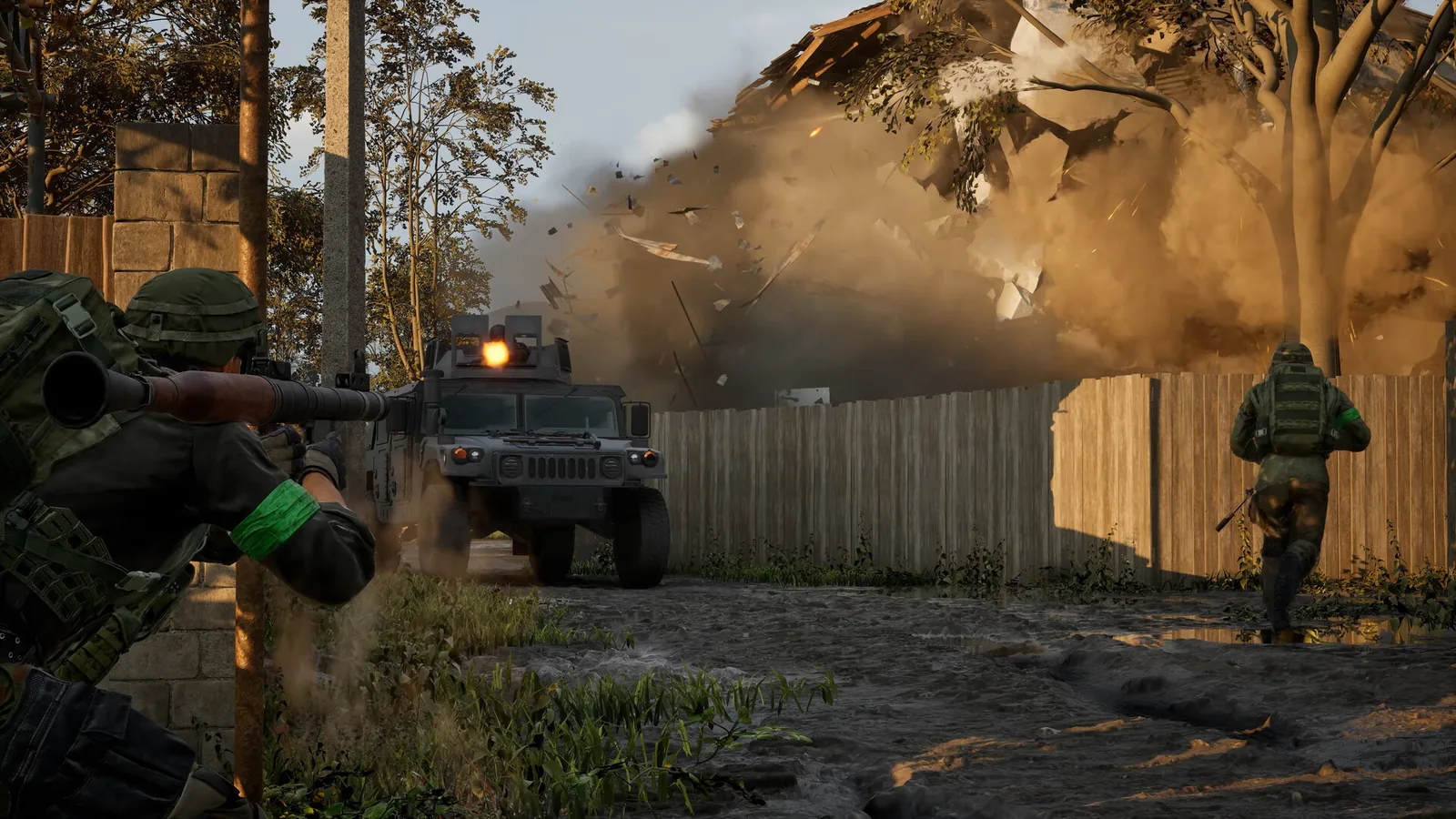
Liltenhead ran the actual numbers on WARDOGS' C4 and IEDs against every wall, gate and base weapon so you are not guessing how many charges a raid needs before you commit to one.
Quick card
- Hesco wall, C4
- 28% per charge, 4 needed at once
- Bremer wall, from behind
- Only 15% from C4, wall absorbs the rest
- Gate or door
- One IED, or one well-placed C4
- The FOB itself
- One IED, or about 5 C4
- Active drill reward
- $9,000, for 2 C4 or 3 rockets to the antenna
- C4 versus IED
- C4 is lighter and quiet, IED hits harder per use
C4 or IED: pick your tool for the job
IEDs are available from very early on, while C4 unlocks once you have picked up a hammer and built a single wall. C4 can be thrown quickly and detonated remotely, and its remote detonator weighs almost nothing without a charge loaded, which makes it the lighter option for a raid. A single IED weighs 3 kilograms and takes longer to set, calling it in audibly over a burner phone, but generally does more damage per use than one C4 charge. Which one to carry usually comes down to whether you value speed and stealth, C4, or raw damage per item slot, IED.
Walls: Hesco is breachable, Bremer concrete mostly is not
A single C4 charge does about 28 percent damage to a Hesco wall, so getting straight through one takes four charges detonated together; an IED does roughly 53 percent per hit, so one or two will do it. A Bremer concrete wall is a different problem entirely, since Liltenhead's test showed a C4 charge on the exposed back of one doing only 15 percent damage, with the rest absorbed outright, and an IED only 21 percent, meaning five IEDs to get through. Building a second wall layer behind the first roughly doubles effective strength against explosives either way, and concrete walls can be stacked to disguise how many layers deep they actually are.
Gates, doors and airlocks
Doors are one-shot by either C4 or an IED. Gates are tougher against a centred C4, which tends to slide to one side and break only that half, but an IED has a noticeably wider blast radius specifically against gates and can one-shot the whole thing, occasionally hitting a second gate built nearby as well. That is the reason gates need real spacing between them: build them too close together and one charge chains into the next. The same logic applies to airlocks built from doors, since a blast does carry through a door in a way it does not carry through a wall, so an airlock needs enough distance between its two doors to survive a hit on the outer one.
Base defences and the FOB itself
The three placeable base weapons take explosives differently despite looking similar: the Vanguard needs three C4 or is one-shot by a single IED, the Talon is the reverse, one-shot by C4 but only takes 25 percent from an IED, and the Stingray mortar emplacement sits in between at 33 percent from C4 and 50 percent from an IED. The FOB structure itself is the real objective of a raid, since one IED destroys it outright and roughly five C4 charges will do the same, cutting the enemy off from their drills and everything stored inside. Placement against the FOB can be picky, and sticking a charge on the wrong side sometimes does nothing, so check that a charge has actually registered before committing more of them.
Cheaper tools and the defensive lessons that follow
An RPG takes three shots to bring down a gate and only one to a door, and three shots to a drill's antenna, which pays for itself given an active drill's $9,000 destruction reward. Mortars and artillery make short work of gates and doors when they are available, and a car driven up to a wall or a few punches through barb wire, about 22 percent damage every three hits, work as explosive-free ways in when you would rather save your charges. Building your own base with these numbers in mind means double-layering walls, especially concrete ones, spacing gates and airlock doors apart so one hit cannot chain into the next, and treating the FOB structure itself, not just its walls, as the thing worth defending hardest.
SOURCE BRIEFING
Source video from LiltenheadWARDOGS - Base Raiding Guide
Watch on YouTubePlaying loads YouTube. Choose captions in the player settings. Credit and thanks to the creator.
Related field notes
 WARDOGS10 Sep 2026Money farming, ranked by riskA risk ladder covering every way to make cash in Wardogs, from parking a transport at spawn to fighting inside the Hot Zone.FIELD NOTE 44
 WARDOGS10 Sep 2026Wing Mait setup and optional OBSStart WARDOGS, set Wing Mait's capture and minimap options, choose a voice and ARM for direct callouts; OBS is only for optional streaming overlays.FIELD NOTE 45
 WARDOGS26 Sep 2026Castle Without BordersBravo 4 makes the castle case for building a FOB keep first, then outhouses and small cells, with the perimeter last, backed by prior art and library plans.
Sources
Numbers and mechanics on this page are paraphrased from:
Wing Mait is an independent project, not affiliated with or endorsed by WARDOGS or its publisher.