WARDOGS / FIELD NOTES
WARDOGS Season 2 wipe: what BULKHEAD said on THE HOTZONE, Episode 1
BULKHEAD's first podcast is an hour and ten minutes of the WARDOGS team picking over the Season 2 wipe: a small XP bonus that tipped a faction, a tank that seemed to turn up in every lobby, a progression system the team itself calls fundamentally broken, and a plan to slow down. Watch it first, it is embedded just below. This page is our companion: the statements that matter, with timestamps, what we think they mean for builders, squads and the economy, and what we will watch for next. We mark what the team said, what we inferred and what is ours.
Quick card
- Source
- THE HOTZONE, BULKHEAD's official WARDOGS podcast, Episode 1, 24 October 2026
- Panel
- Joe (Executive Producer and Studio Lead), Pete (Lead Designer), Mark (Technical Designer), Tim (Creative Director)
- The wipe
- A look back at the Season 2 launch weekend, not a list of what carries over or when the next reset lands
- Next
- Intel pencilled for Q2 next year; three-month seasons with a smaller midpoint update under discussion
- For builders
- Mortars and hot zone magnets everywhere is a problem the team wants to solve with cost, not caps
- Status
- Our reading of auto-generated captions; spoken figures are as heard and unaudited
Watch the episode first
BULKHEAD published this on 24 October 2026 as the first episode of THE HOTZONE, billed as the official WARDOGS podcast. It runs 1 hour 10 minutes 41 seconds, it is the developers talking to each other as much as to us, and it is the only source for everything below. Watch it before you lean on our notes: tone does not survive summary, and this episode is mostly tone. The panel, as the video introduces them: Joe, Executive Producer and Studio Lead, who hosts; Pete, Lead Designer; Mark, Technical Designer, who looks after the meta economy of cash and XP (2:15); and Tim, Creative Director. The cold open says plainly that they are not a large AAA team and that what they lack in polish they want to make up for in communication and context (1:14). We think that is the right trade, and we are glad they made it.
Watch THE HOTZONE Episode 1 on YouTube → BULKHEAD's channel on YouTube →
What the episode is, and what 'the wipe' means here
Despite the title, this is not a wipe explainer. There is no list of what carries over, no reset date and no timetable for the next one. "The Wipe" is the team's shorthand for the Season 2 changeover and the weekend of argument that followed it. The question the host keeps returning to is whether the team panicked and reacted too fast, or reacted to what players genuinely felt (5:14). Two remarks touch the reset itself. Before launch, the team says, sentiment was already poor because people dislike wipes and lose progress (4:00). And at 31:29 they describe being asked to wipe again that very weekend, declining, and instead promising to pull some content forward and shorten the next season to four or five weeks, against the six to eight they had in mind. For what carries over, the best source is still the press conference, where BULKHEAD said the XP you earn is banked for the Skills system. This episode neither contradicts that nor repeats it. How we read it: from the auto-generated captions, which carry no speaker labels and mishear names, so we name a speaker only where the panel makes it clear.
The statements that matter, with timestamps
We have kept quotation short and left the rest for the video. Times are from the caption track and are where each statement starts.
| Time | What was said | Status |
|---|---|---|
| 6:20 | Lone Star carried a 2.5% XP bonus at launch; the team removed it around hour ten | Stated |
| 8:04 | Top 5% of matches fell from about 46 minutes to 41, around 12% faster (Mark) | Stated |
| 13:20 | Season 1 had about 3.5 million unique players, Season 2 about 1.5 million; the top 25% levelled 2.4 times faster (Mark) | Stated |
| 15:10 | A driver progression exploit touched fewer than 400 players; the team says tanks were visible in 30 to 40% of games | Stated |
| 20:10 | Driver share went from 9% to 44% on day one, described as a 340% rise in people wanting to drive | Stated |
| 34:09 | Career level is not role level: 74 hours for one player, about 3 hours for another, to reach the same armour | Stated |
| 36:44 | Intel looks set for Q2 next year | Stated |
| 47:26 | The team cannot keep up monthly seasons and thinks a three-month season with a smaller midpoint update is the way to go | Stated, not final |
| 48:23 | Limited-gear servers will recreate the low to mid game; the infrared rangefinder will not be in them | Stated |
| 54:15 | Tim would back the infrared rangefinder out; the panel does not settle it | Stated, undecided |
| 1:09:22 | A one-per-FOB limit on hot zone magnets was rejected; a higher fuel cost was chosen and the balance is not found | Stated |
| Whole episode | Lone Star is the blue faction; no source in the episode says so outright | Inferred |
Launch day and the first ten hours
The team takes release day in order. Season 2 went down for about an hour and a half and came back up (2:56). Early on, Lone Star carried a 2.5% XP bonus (6:20). It was there because the team had already fixed a spawn problem on Bakarani and players were still teasing the faction about its record, so they tilted the other way to swing it back (6:24 onward). The bonus was tiny. Its effect was not: the best players from Season 1, who were online first, went to Lone Star, and the faction ran at about a 67% win rate until the bonus came off, after which it evened out (11:25). They fixed that around the ten hour mark, and the argument that followed was internal as much as public. One view on the panel is that announcing an earlier Season 3 on the Saturday morning was the mistake: it was all anyone talked about, and it made players ask why they should invest in Season 2 (3:11 to 4:06). Another is that telling players quickly that the team would fix things was right. We find both credible, and we like that they argue it in the open. A note on the faction: the captions say "Lone Star" in several spellings. Our launch guide already calls it the Lonestar experiment on the blue team, and the episode talks about the same bonus as "blue", so that is how we read it.
The numbers: perception against data
Mark brings the data. The top 5% of matches, the complete stomps where one team dominates, went from roughly 46 minutes to 41, about 12% faster (8:04). End of match bonuses had been 30 to 40% of a role's progression, so a large share of role progress moved with that. It is not game-breaking in itself, he says. What changed the picture was who was left. Season 1 had about 3.5 million unique players, Season 2 about 1.5 million, so the old top quarter became most of the lobby, and that group levelled 2.4 times faster than in Season 1 (13:20 to 13:31). The team puts unique logins in the first 24 hours at 1.5 million (8:44). Their read is that the median player was the one enjoying Season 2 and coming back (21:47), while the loudest voices, the people online at launch, were also the fastest and the best. The captions garble the figure for that group, so take "around 5,000" as heard (8:52). The team is also upfront that it cannot share all of its data (22:44). We take the numbers as theirs, spoken and unaudited, and we find the shape believable: a smaller, keener lobby levelling faster is what a second season of a hit game tends to look like.
The tank, the exploit and the snowball
The second thing that tipped sentiment, in the team's telling, was a tank. A new and deliberately weaker tank unlocked at level 20, which the team puts at about ten hours of play, and a driver progression exploit let fewer than 400 players reach vehicles early (14:24 to 15:10). Four hundred players spread across four hundred servers put a tank in front of a great many eyes, and the panel walks through that arithmetic: tanks in 30 to 40% of games, a perception of a tank everywhere, a reality of a small number of drivers (15:58 to 16:45). The number we found most useful sits behind it. From Season 1 to Season 2 the share of players taking the driver role went from 9% to 44% on the first day, which the team describes as a 340% increase in people wanting to drive (20:10). The panel disagrees on whether that was predictable; it agrees the game cannot have one driver for every two infantry (20:42). At 50:58 the figure returns as an open problem: "We can't support this long term." The choice they describe is between pausing everything to give logistics a stronger identity, or doing something that may upset some players but keeps the game healthier (51:08 to 51:30).
Progression: fundamentally broken, and why
The most direct passage in the episode is about progression, and it is candid. Career level is not role level. One of the designers gives two examples: one infantry player earns assault level 40 and medic level 30 by healing and reviving, and takes 74 hours to reach career level 70 and the level three armour; another reaches level 12 in every role in about three hours and has the same armour (34:09 to 34:55). The scoreboard only shows career level. "It is a fundamentally broken system", the designer says, a fact the team knows, and it is pushing that system to its limits while it builds something better (34:35). What drove the Season 2 speed-up was a wall: in Season 1, players stalled at levels 9 and 14, and about 70,000 reached level 35 (33:16 to 33:25). A role comes online at level 20, the team says, so a player quitting at 14 never meets it. The captions put the number quitting at 14 at 1.8 million (34:25); we take that as heard. Why it is this way: the team says it had to choose between giving up and shipping a smaller, cheaper game to grow over time, and that the full version was always planned for 2028 (35:43). The XP system is a primitive one modelled on Arma 3's King of the Hill, and the team calls it what it is, a minimum viable product (36:06 to 36:22).
Intel and Skills: the system underneath
Intel is the system the team wanted under the XP all along. It was meant to be a seasonal, paced resource, earned at a daily rate with no cap, so heavy players still progress though more slowly than most, and a weekend player can save up a week's allowance and catch up (37:17 to 38:04). Weapons could come and go between seasons and the unlock order could change, and the team could say roughly where a player should be after a given number of hours. It lets you unlock out of order, too: a sniper who wants only the MK22 can save Intel for it without playing the guns in between (40:29 to 41:14). The host says it looks like Q2 next year (36:44). Skills sit beside it. Role XP stays, and skill points earned in a role are spent in a driver or pilot tree on small passives, with bigger capstone abilities at the top. The team's own example is a ladder climbed a fraction of a percent to a few percent faster. Skills are meant to persist across seasons: your character, the WARDOG, lasts (38:53 to 39:42). The press conference said the XP you earn now is banked for Skills. This episode explains why the shape is so odd today: XP is standing in for a system that was not ready. Our read, not theirs: if Intel resets each season, as described at 37:17, and Skills persist, then the seasonal side of the wipe will matter less once those two arrive in the second quarter.
Overstacked, and a plan to slow down
Joe is unusually direct about the team's part. The studio sold about a million copies before launch and then outran every plan; he says the success made the team less confident rather than more, because there was no plan for it, and he describes his own leadership as having failed at that point (18:25 to 18:49). A fear of running short of content, which he ties to the studio's earlier game, led to Season 2 being stacked too full: "And you know what happened? Quality dropped." (0:06; the same point at 46:00). The team held its first town hall since release on the Monday, and called the weekend a wake-up call (47:16 to 47:25). It also explains why reviews weigh so much: when recent reviews slip to Mixed, the storefront stops pushing the game, and the board asks questions (23:03; 26:13 to 26:42). The fix is pace. "We got to slow down. We can't do monthly seasons." (47:26). The proposal is a three-month season with a smaller update at the halfway point, which they present as what they think, not as a decision (47:32). That sits oddly beside the press conference's six-week target and the weekend's four-to-five-week promise. We do not know which survives contact with a calendar. The limited-gear servers are a smaller version of the same instinct: a restricted weapon list to recreate the low to mid game for anyone who misses it (48:23 to 49:12), called a primitive first try. We think saying all of this out loud was the right thing to do.
Play Your Way, and why nothing gets capped
The longest thread in the episode is balance, and it is where the team is firmest. The pillar is Play Your Way: Intel and Skills are meant to let a sniper stay a sniper and still reach other trees. The team wants horizontal progression in spirit, but not at the price of one weapon or one style being objectively best (44:25). On restrictions, the panel works through a limit on rocket pod helicopters and shows how each fix creates new edge cases. If only one may be in the air, what happens to the one crashed against a tree (1:04:25 to 1:05:02)? Every cap also removes a good moment, such as a squad rolling out with twenty tanks (1:07:18). Tim's image is a tightrope: balance is not a flat line, sometimes things are stronger than others, and a season is allowed to feel different (1:05:50 to 1:06:00). New content is allowed its time in the sun before it is pulled down (1:06:52). And players, the team says, are very good at spotting problems and often less good at proposing solutions (1:03:35). As players ourselves, we plead guilty to the second half.
The infrared rangefinder and the new map
The infrared rangefinder is the one live disagreement, and the host warns that it is raw and not to be taken as gospel (52:35). Tim would back it out: it shows everyone, and rain and fog make it stronger (54:15). Another voice on the panel likes the fantasy and the spotting role it makes possible, and says the team is proud of its spotting mechanic (54:45 to 55:35). Mark, asked for the deciding view, favours balancing it, and the ideas on the table are battery life, foliage blocking and level design (57:39 to 58:43). No decision is reached. A line at 1:07:50 says the team "stepped in" on the rangefinder; the captions are ambiguous there, so we cannot tell what is live. The new map gets a warmer hearing. The team describes a path from Bakarani as a bowl, to a hill, to flat, and now a half-bowl, half-flat map with interiors and several floors that one panellist calls the most fun they have had in WARDOGS (59:31 to 1:00:55). The panel expects the extra verticality to take some of the sting out of the rangefinder, though not all of it. The captions say "hospital"; we did not hear a formal name or a release date.
Builders, magnets and mortars
For builders the key passage is short. Joe points out that builders were nerfed in the Season 2 notes and asks whether anyone has heard a complaint about it (1:08:52). The team came close to capping hot zone magnets at one per FOB, and Tim was the one who argued against it as contrary to the game's values. The lever they chose was cost: more fuel. They say they have not yet found the balance (1:09:13 to 1:09:36). They also read the Season 1 reviews as a story in two halves. In the mid-game, players complain of mortars and hot zone magnets everywhere; by the end, nobody does, and the complaints are about the infrared rangefinder (1:09:36 to 1:09:50). There is no solution for the rangefinder, the team says, but there is one for the mid-game, and finding it "is the fun bit". On fuel, the panel says it does not use fuel well enough yet (1:03:14), and on cash, that a player with money can rebuy a Havoc a minute after you shoot one down (1:02:48).
What it means for players
This section is our view, not theirs. The episode never mentions drills, but the pieces line up with how we read Season 2. Building. A dearer build menu and a nerf nobody is shouting about suggest the Season 2 costs are staying. Our launch guide and our MG nest guide come to the same place: fewer, better-placed pieces, and a few well-defended drills over one enormous FOB. The team's mid-game of mortars and magnets everywhere is the very thing a defended drill is for, and fuel looks like the dial they will keep turning. Squads. The team saw more people playing support and logistics, and sees spotting as a role that pays (55:35 to 55:49). With 44% of players taking the driver role on day one, armour is common, and a squad with a logistics group, an RPG pair and its own air cover is better placed than a squad of rifles. On the RPG, the team describes moving the unlock from level 4 to level 6 back in beta, and holds that each day should bring a new problem and a new tool (49:43 to 50:18). Economy. Mark owns cash and XP, and every season will move prices and unlocks. Expect the same each season, and read old cost tables with a date in mind.
Season 2 building: dos and don'ts → Place a SAM where it can work →
Our take as Wing Mait players
Wing Mait is a live callout engine, a tactical voice system in beta on Windows. It watches the game window and speaks contacts on the minimap with bearing and distance, downed teammates, your own downed state and your cash, and it speaks a mortar firing solution from our calculator. It does not read game memory, and it does not read XP, Intel or Skills, so nothing in the progression talk touches it. Session stats and OBS overlays are still in development, and our web Field Log is coming soon. What the episode changes for us is the planning layer. Our price tables, the base builder and our guides follow the Season 2 menu, and we will update them whenever the cadence moves, whether that is monthly or quarterly. If tanks, Havocs and heavy vehicle lobbies persist, the work shifts to defence depth and who is on air cover; we will say so when we have tested it, not before. Until then, the minimap contacts, the mortar solution and the base builder are where we can help.
Mortar fire missions → WARDOGS maps and mortar calculator → Wing Mait base builder →
What we will watch for
1. The vlog promised "later next week" on Season 2 and on Season 3 and beyond (0:34 to 0:46). 2. Which season length survives: four to five weeks, six weeks or three months. 3. Intel in Q2, and how Skills and banked XP fit with it. 4. The limited-gear list: which weapons and equipment, and how it affects where fights happen. 5. The infrared rangefinder: any decision. 6. The driver share and the logistics role: whether the team acts on the 44%. 7. Hot zone magnet, mortar and fuel costs: whether the numbers move again. 8. The new map's name and date. We will update this page when BULKHEAD confirms any of it.
Sources and what we are unsure of
Everything on this page comes from BULKHEAD's video, THE HOTZONE, Episode 1, "The Wipe", published on 24 October 2026 (1 hour 10 minutes 41 seconds). The channel and title were checked through YouTube. We worked from the auto-generated caption track, not from any summary, so please watch the episode for exact wording. What we are unsure of. The captions carry no speaker labels, so we name a speaker only where the conversation makes it plain. Lone Star as the blue faction is our reading. The "around 5,000" vocal players and the 1.8 million quitting at level 14 are garbled in the captions. The map is called "hospital" in the captions. The line at 1:07:50 about stepping in on the infrared rangefinder is ambiguous. Every figure is as spoken and unaudited. Thank you to the team at BULKHEAD for making the show, and for saying the hard parts out loud. Watch the full episode on YouTube, and subscribe to their channel if it helps.
Watch THE HOTZONE Episode 1 on YouTube → BULKHEAD's channel on YouTube → Season 2 press conference recap → Wing Mait for WARDOGS →
SOURCE BRIEFING
Source video from BULKHEADTHE HOTZONE | Ep 1 | "The Wipe"
Watch on YouTubePlaying loads YouTube. Choose captions in the player settings. Credit and thanks to the creator.
Related field notes
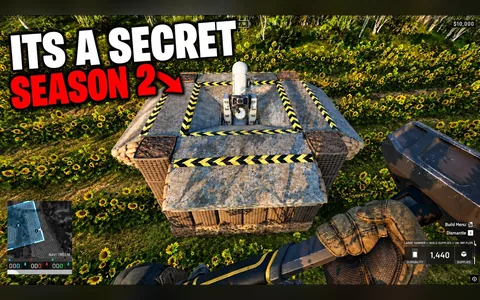 WARDOGS21 Oct 2026The secret CIWS sunflowerWhompin's Season 2 CIWS build: a bunker, a ring of Hesco petals and a gate roof propped up on M2 Brownings, so you sit under the mortars and repair from inside.FIELD NOTE 08
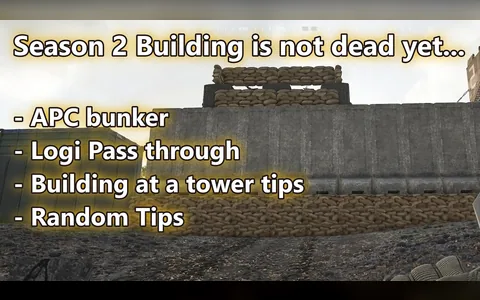 WARDOGS21 Oct 2026Season 2 building: dos and don'tsA logi pass-through with nothing to hit, an APC garage built before the APC arrives, a CIWS on its roof and why tower walls fail, from RadioGLHF's video.FIELD NOTE 09
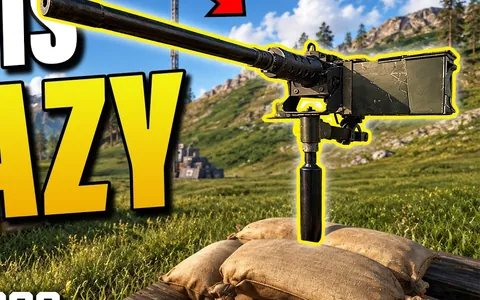 WARDOGS18 Oct 2026MG nest buildThe Season 2 MG nest on a bunker and a wooden step: parts, 695 build supplies, placement, cover and a step-by-step build, from HitboTC's video.
Sources
Numbers and mechanics on this page are paraphrased from:
Wing Mait is an independent project, not affiliated with or endorsed by WARDOGS or its publisher.